Apologies for the delay in posting, I was exhausted last night and couldn’t finish writing before I fell asleep. Without further ado:
First, Happy Father’s Day! It has been such a joy and a blessing to be with my dad on this trip. It has been so fun to see him interact with the teens (especially the guys) and really invest in them as well as how he has engaged with the sisters. They all love him (shocker) and call him “Okie Dokie Dean” – on one of the first days he was helping bring food from the kitchen to the dining room and they told him to wait and he said “okie dokie” and that really threw them off. The sisters speak little to no English so he had to try and explain that okie dokie just means “okay” – any who, “Okie Dokie Dean” became their name for him followed by lots of giggles!

This morning started earlier than normal with a simple breakfast (just bread, cereal and coffee) at 5:40am and we loaded the bus at 6am to start driving to Lake Atitlán. It is about a two hour drive through the windy roads of the mountains to get there. I tried to sleep on the bus, but I wasn’t able to fall asleep. I did get a few cool pictures of the landscape as we drove there though.
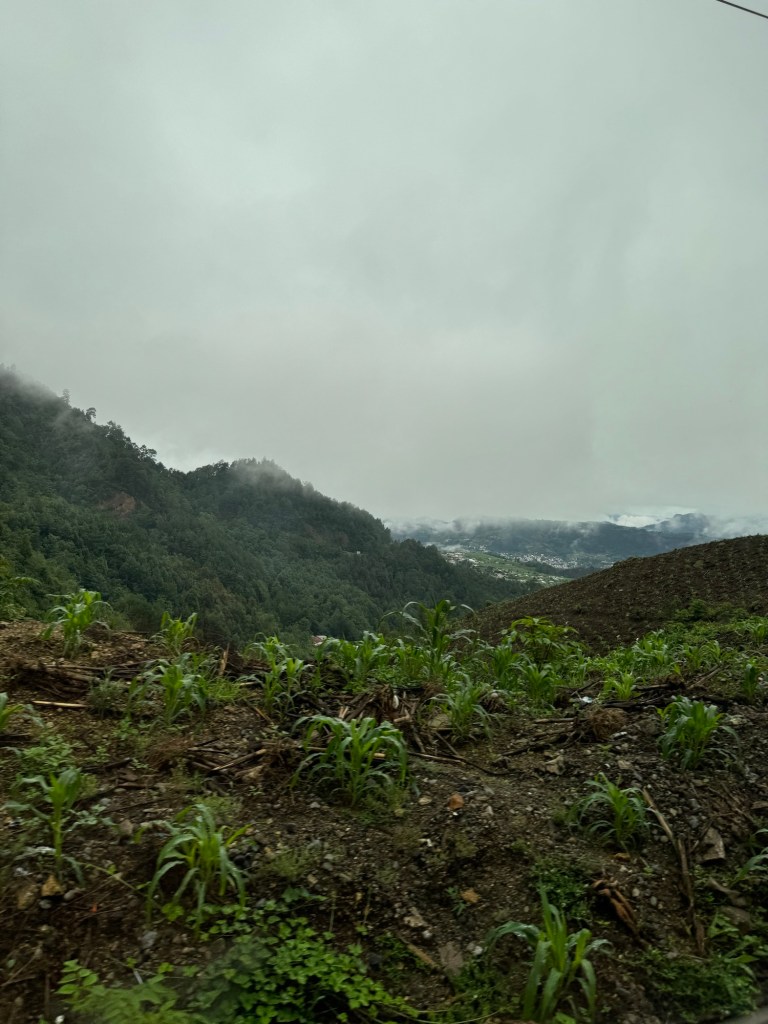
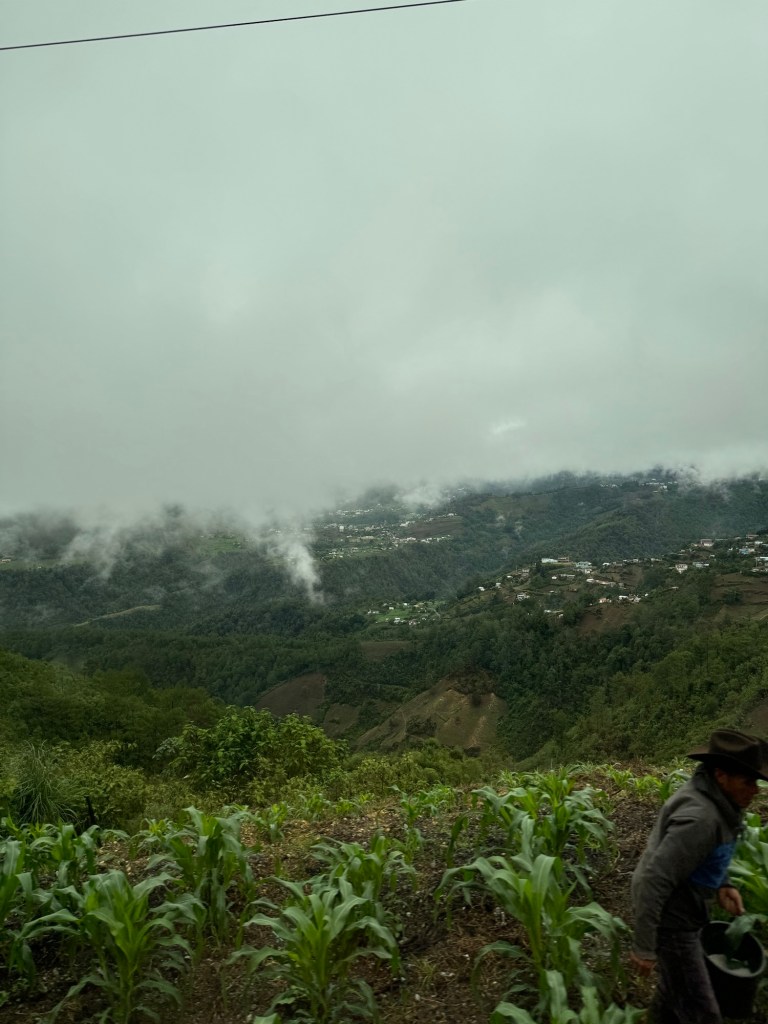
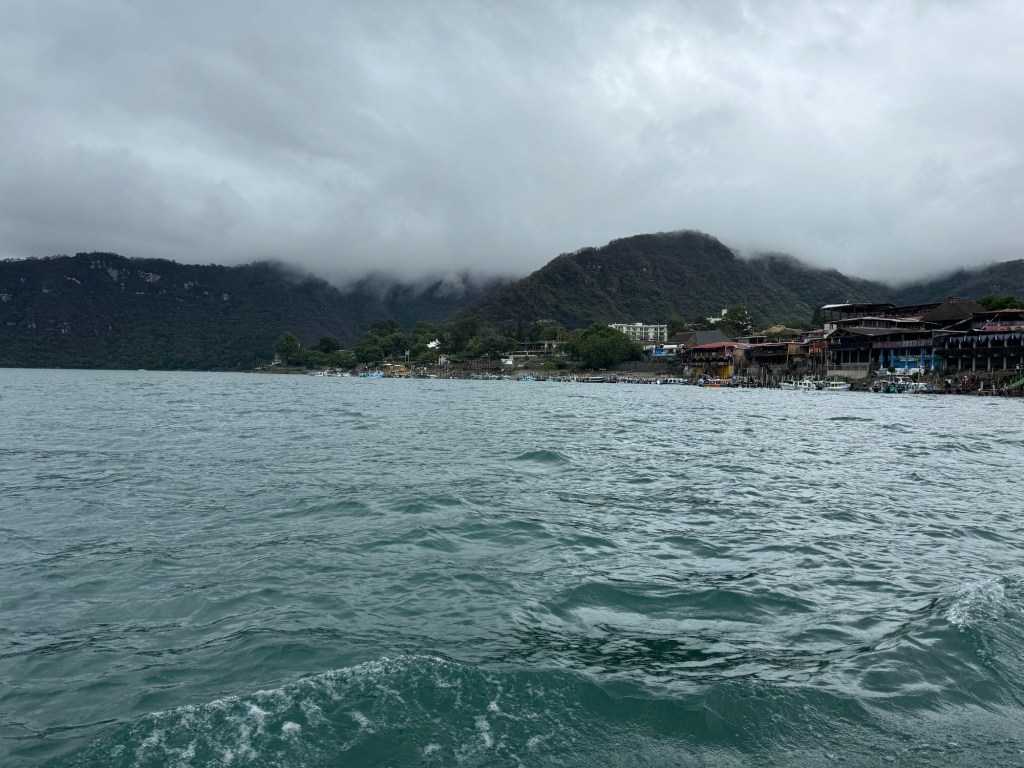
It was rainy all day (not the best weather for a lake day) but we made the best of it. We arrived to the lake around 9:00am with the hopes of getting over to the town of Santiago for Mass at 10am. The boat ride took a little longer than expected so we were a little late for Mass which meant Fr. Mark wasn’t able to concelebrate with them, which was a bummer. The church was PACKED, and it was a good reminder of the universality of the Catholic Church. While I speak some Spanish, I don’t know enough to fully follow all of the words of the Mass, but I know THE MASS which means I am still able to fully participate. Pretty cool!



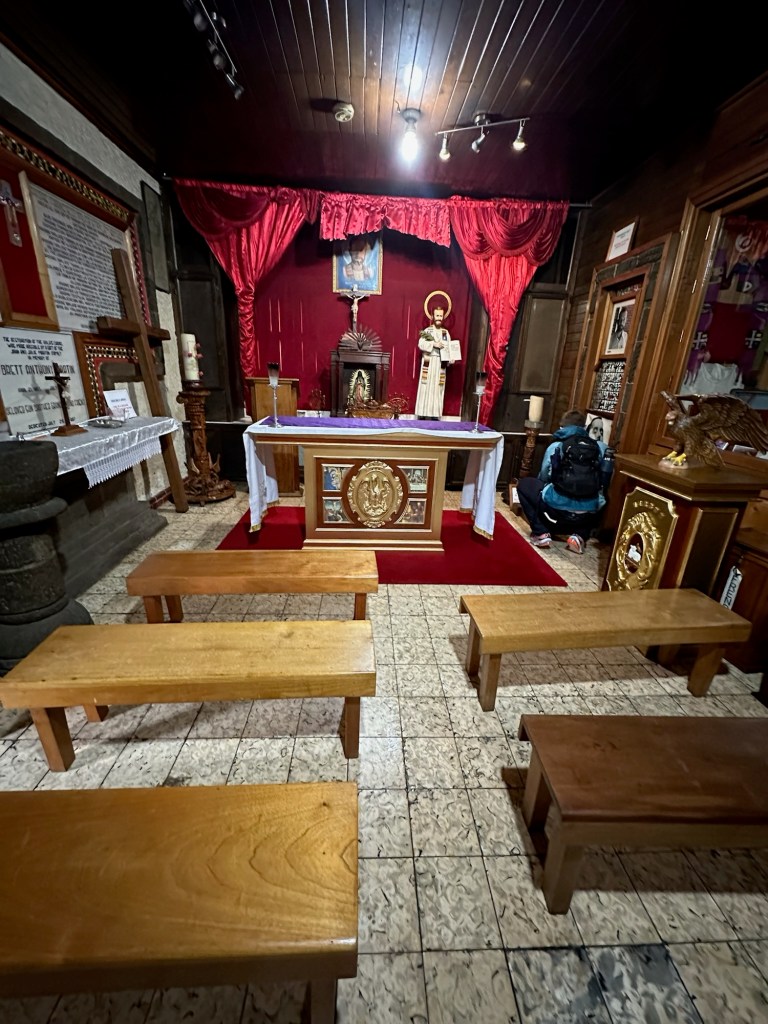
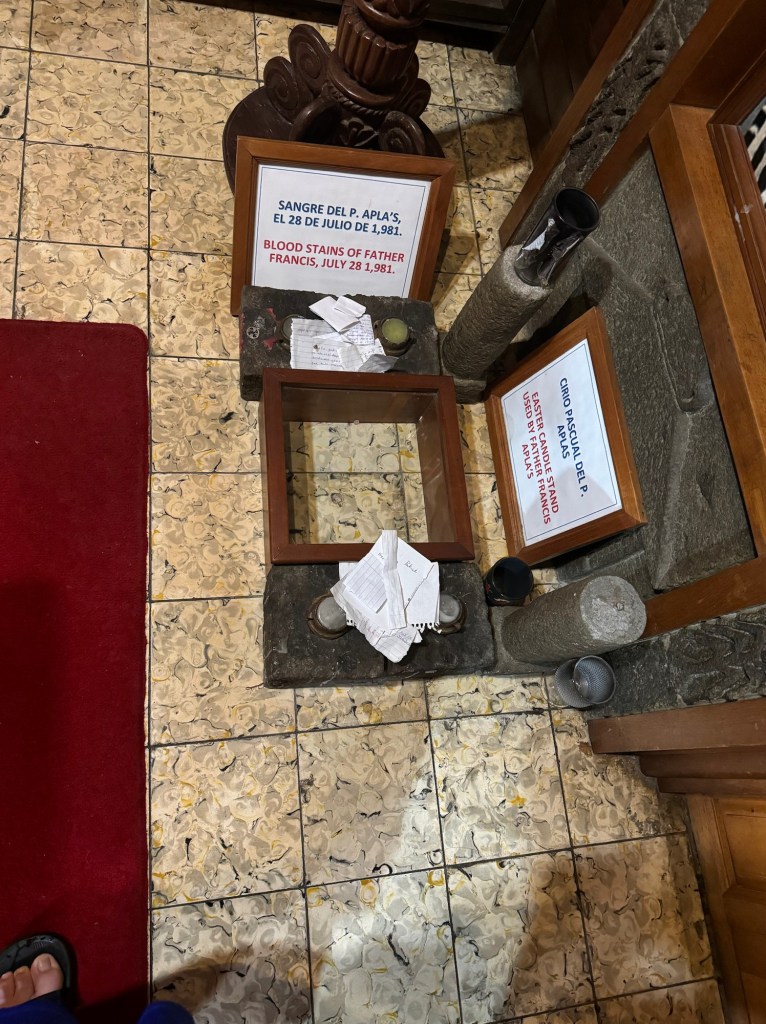
After Mass we had an opportunity to tour the rectory (fancy word for house) where Blessed Stanley Rother lived and was killed serving the Guatemalan people. (More on Blessed Stanley Rother can be found at the end of the blog – but in brief he is from Oklahoma and volunteered to come serve the people of Santiago Atitlán for years. During their civil war, he was killed and his cause for canonization is currently being investigated!) we also had a chance to pray at the place where his heart is buried. When the civil war escalated and Fr. Stanley was placed on a hit list, he was forced to return to Oklahoma by his bishop, but after only a short time he told his bishop “my heart is in Guatemala with my people” and so he returned to Guatemala where not long after he was killed. Because of this love for his people they requested to keep his heart while the rest of his body is buried in Oklahoma.
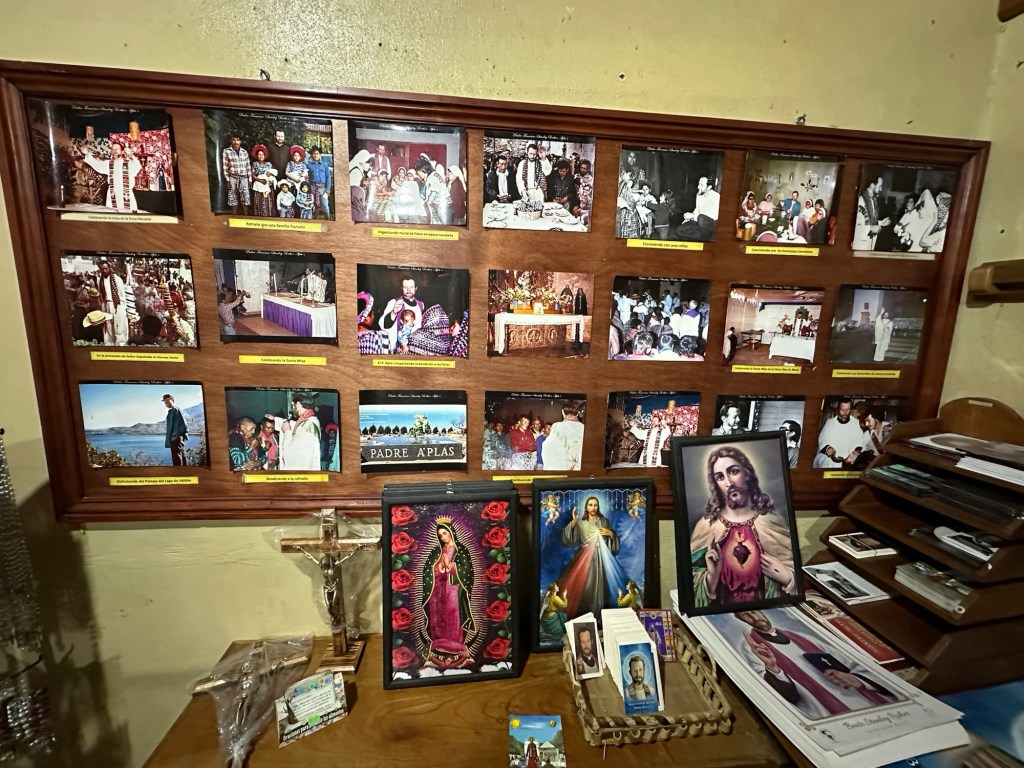
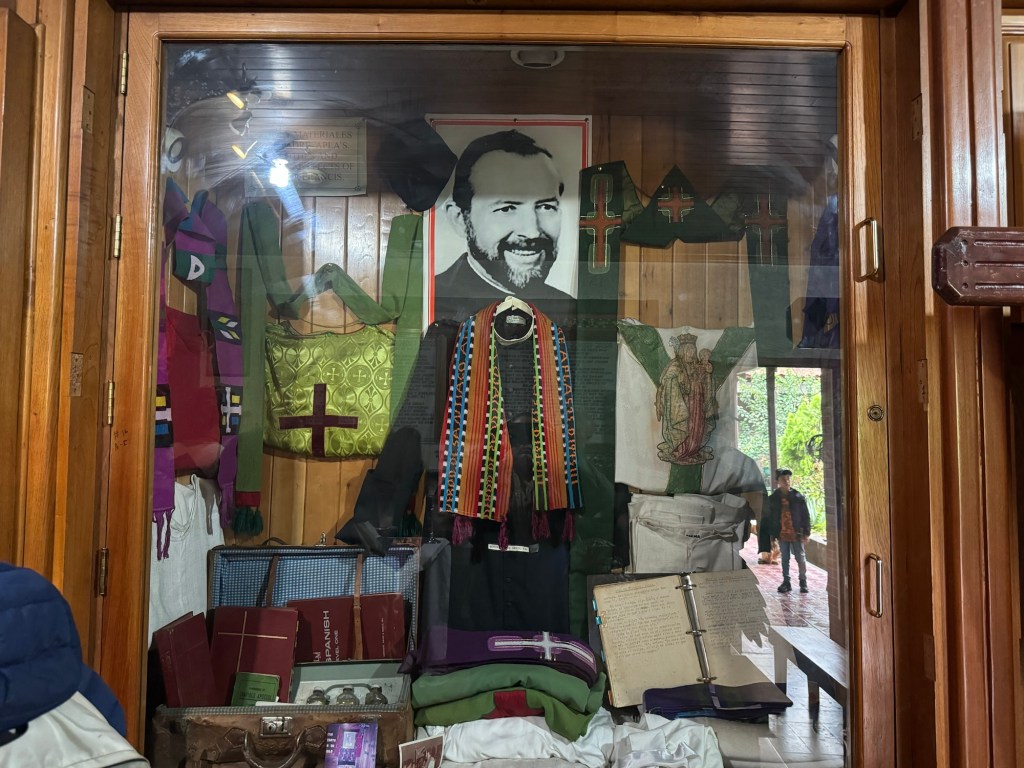
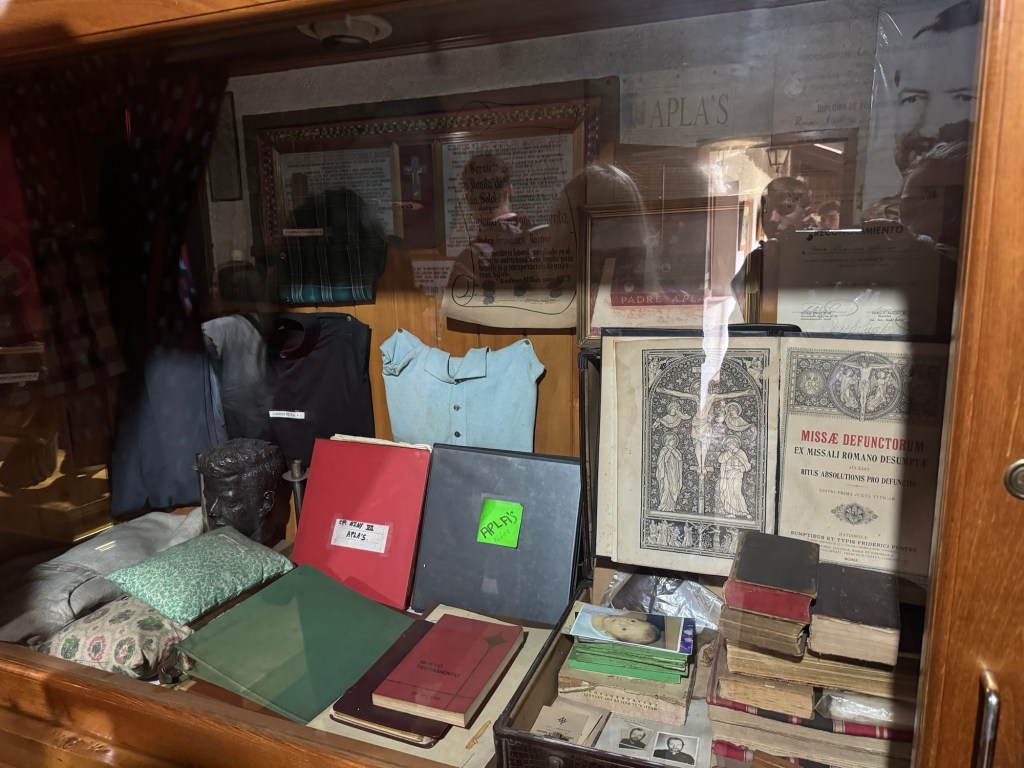
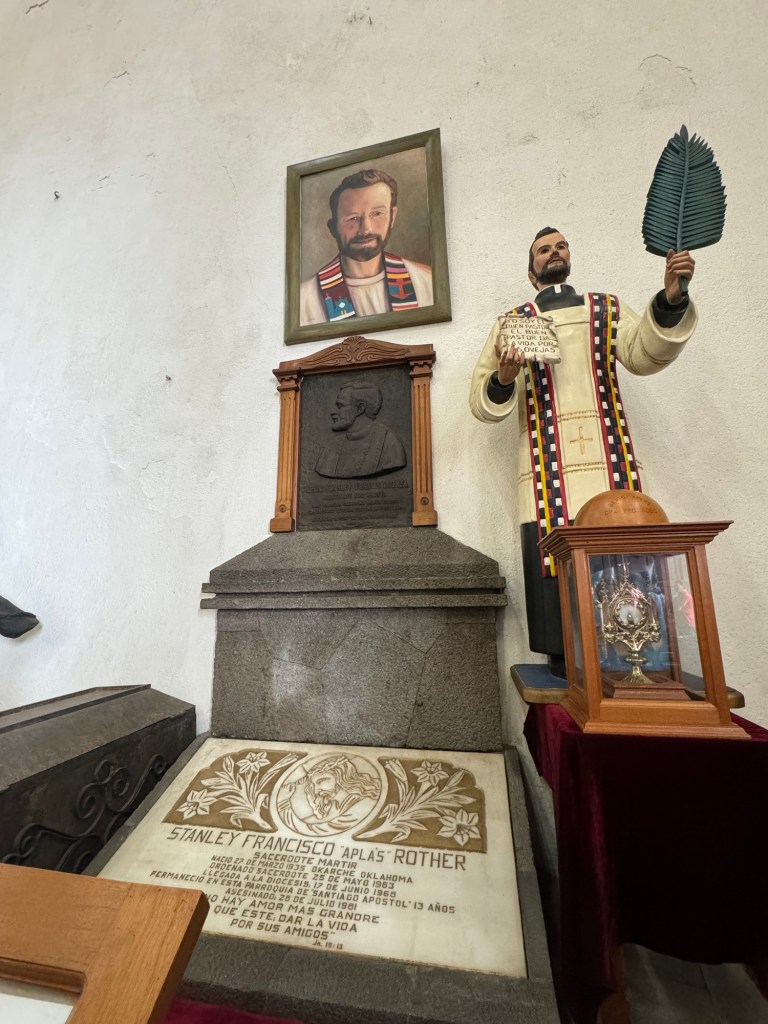
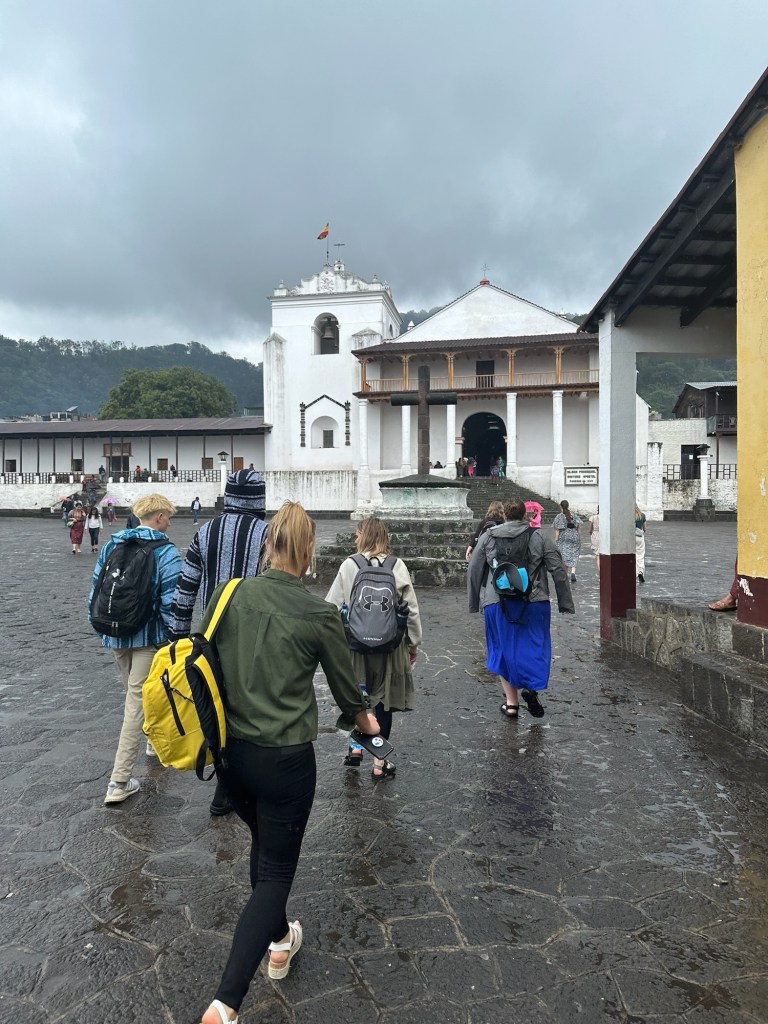
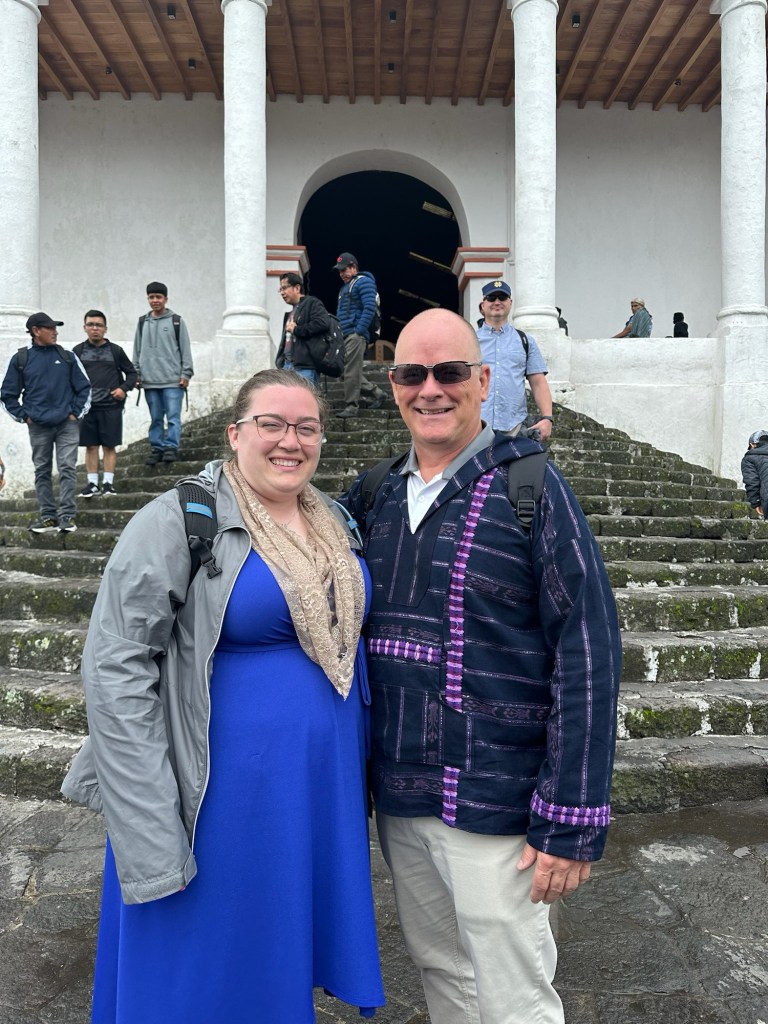
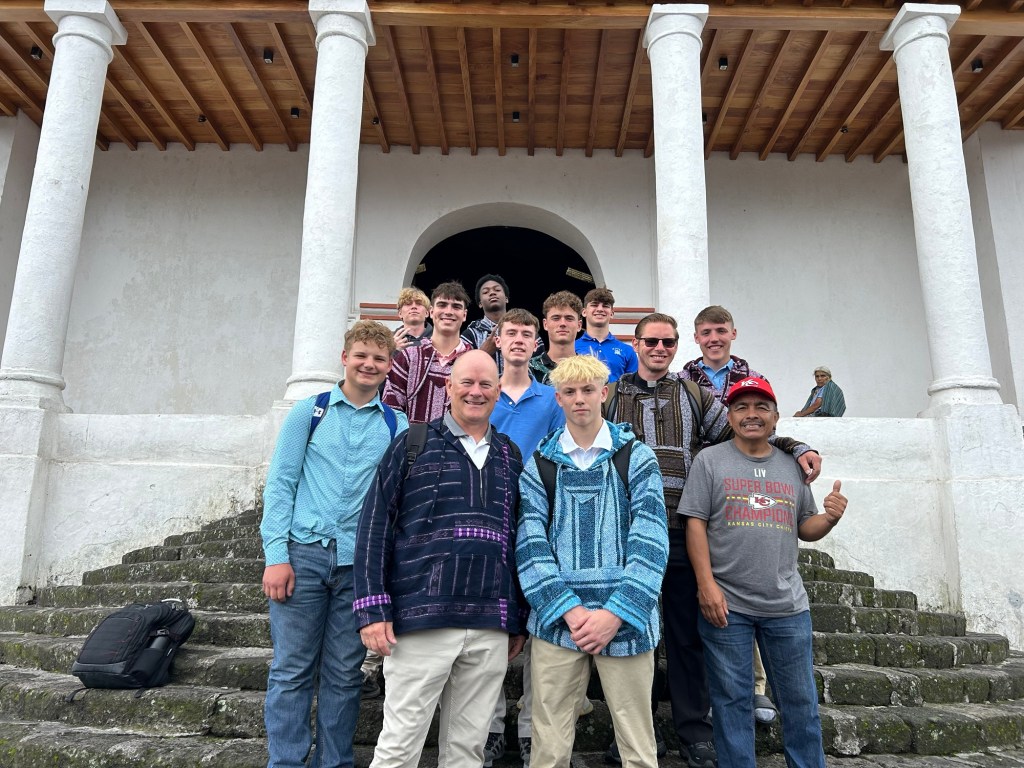
After Mass and walking around the church we then had a few hours of free time in the city of Santiago, I was feeling pretty tired from the early morning so myself, dad and Allison (a theology teacher and the dance coach at Pius) found a coffee shop in town and just hung out there for a few hours before we had to head back to the boat.
Once back on the boat we went about 20 minutes away from the town and dropped anchor to allow time to go swimming. It was still raining at this point so I didn’t get in the water, but many of the teens did and they said it really wasn’t cold until you got out of the water. They all swam for about and hour and then we made our way back to the dock in order to get back on the bus and head back to the convent. It was pouring rain at this point and again the roads are very winding. I get a bit carsick at times so I took some Dramamine which knocked me out so I slept most of the way back to the convent.
When we arrived back it was time for dinner and the sisters decorated the dining room with a bunch of balloons and had a “Fiesta” sign hanging up and played music while we ate, tonight’s food was amazing, black beans, various tostadas (guacamole, salsa, black bean), homemade taquitos, peppers stuffed with chicken and rice, and plantains stuffed with sweet black beans and raisins – I had never had sweet black beans before but they were great! After dinner we had ice cream sundaes while Maynor and the sisters shared some thanks and goodbyes, the sisters gave us all a bracelet to remember them by. Then the crying started because we had to say goodbye to many of our interpreters and masons. It’s amazing how close we all get in such a short amount of time. These people are such a gift and I am blessed to have the privilege of getting to know them and spend time with them (even if it is too short).
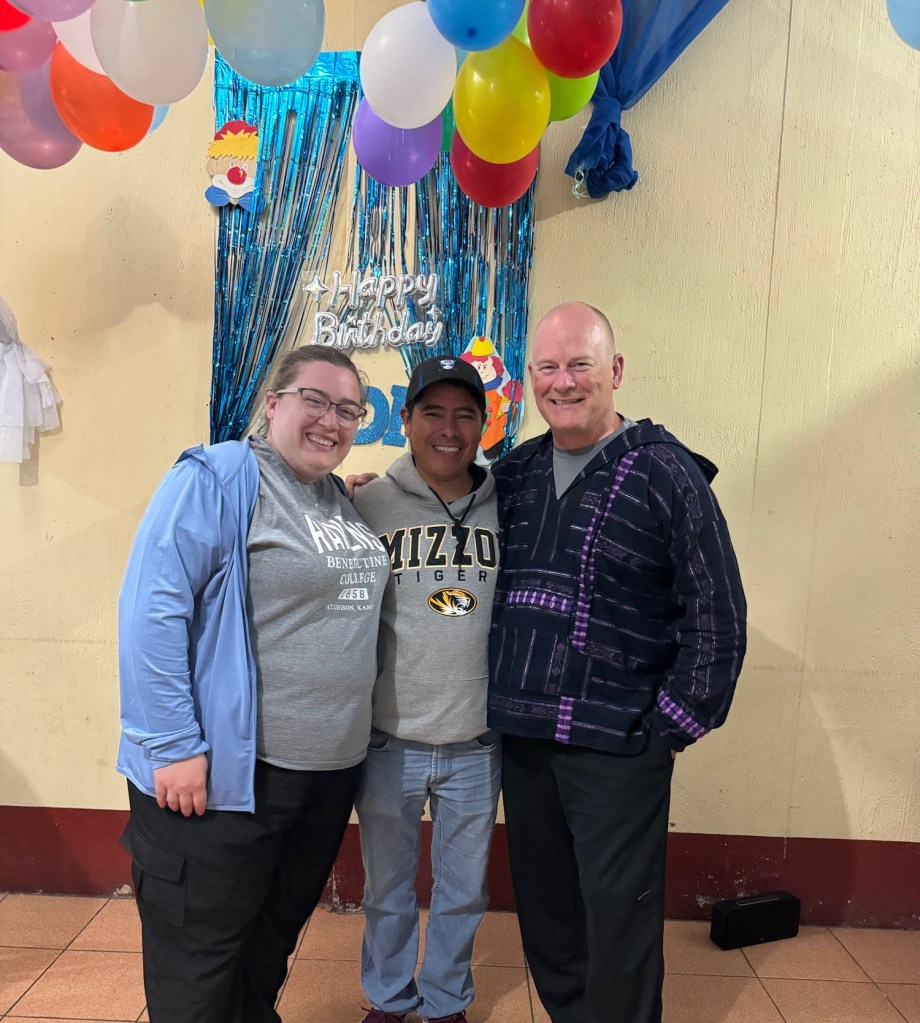
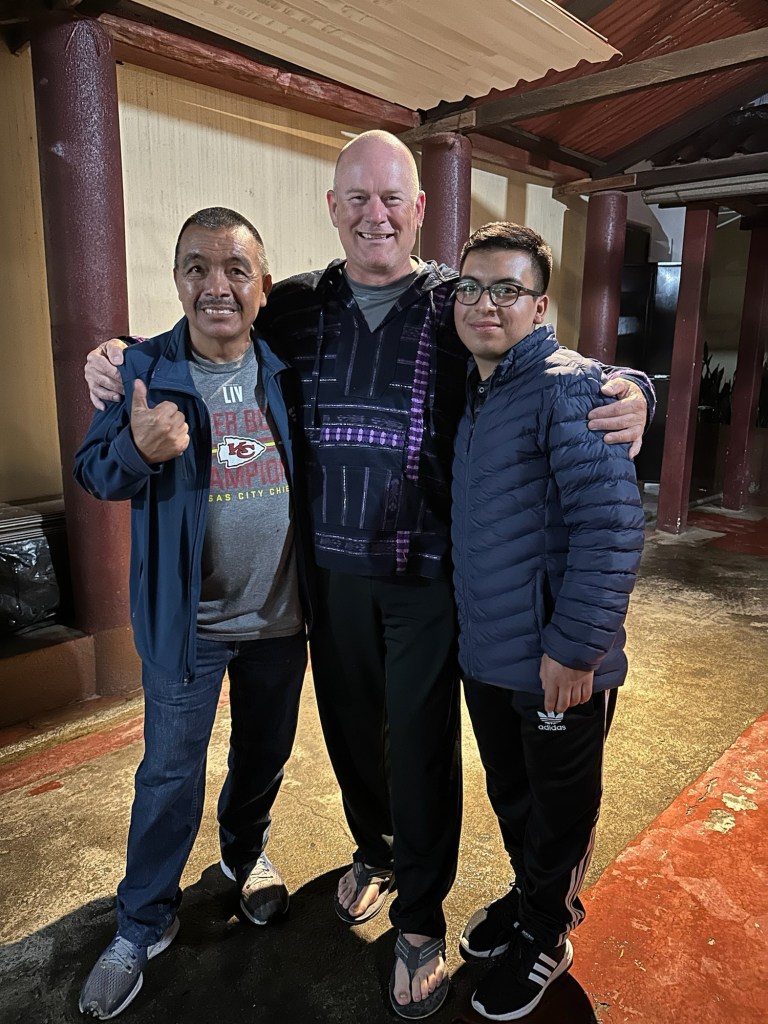
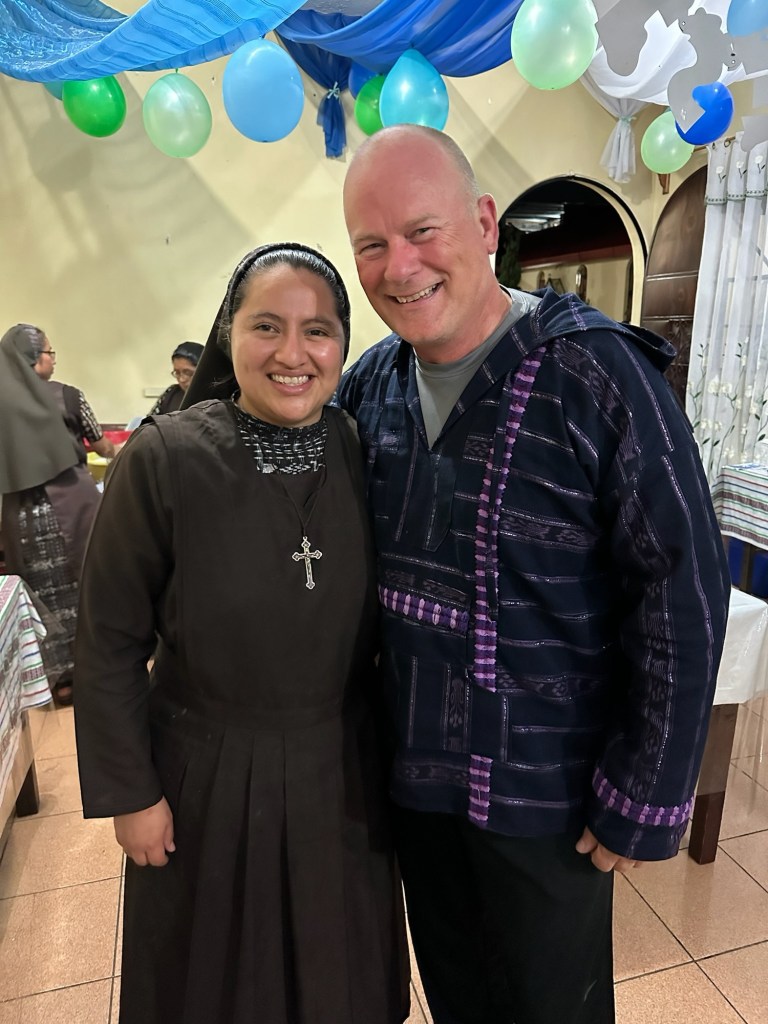
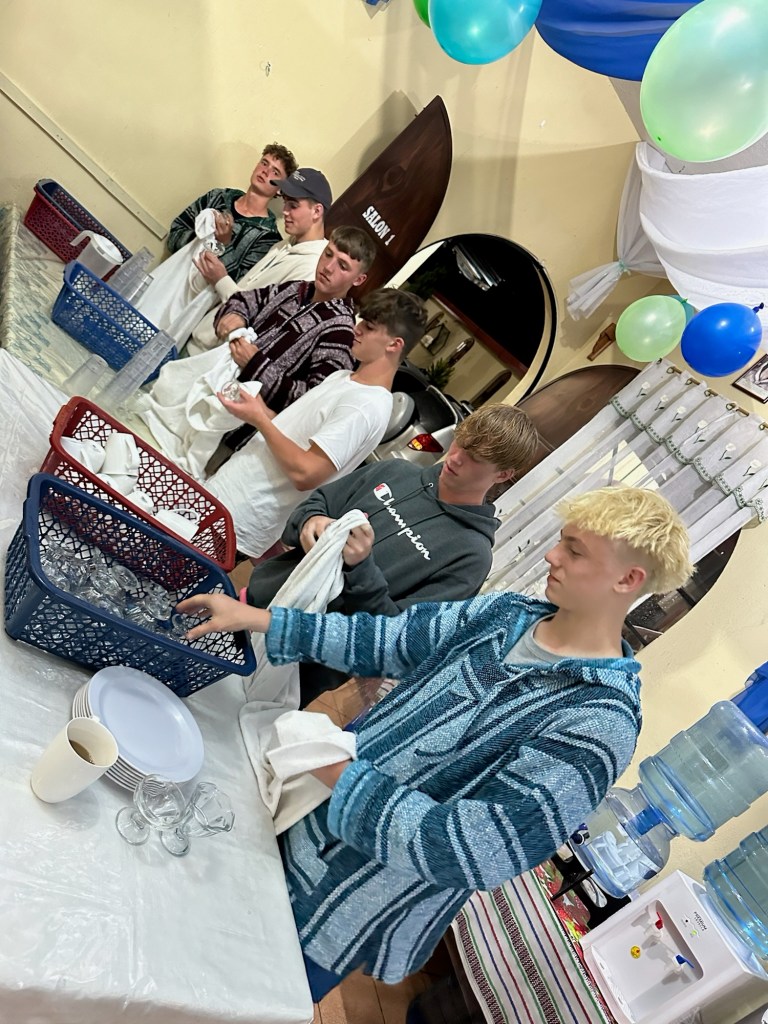
After dinner we had our final pow wow as a whole group. First some of us that had been on the trip before gave some advice on how to make sure that we go home changed people from this trip. We all agreed that being more grateful and joyful is the best way to do this. Rather than complaining when something doesn’t go your way, thank God for the circumstances and find the blessings within them. Find ways to give back at home, volunteer with a soup kitchen or at a nursing home.
Then we had a few minutes to reflect on one of the following questions:
- Where did you see Christ in the work we did this week?
- How did this week impact you?
- What is one resolution you are going to make going back home?
There were a lot of common themes of seeing Christ in the people we visited with during our sick visits, in the sisters and all of the interpreters and masons. A few of the guys also mentioned they really saw Christ in Fr. Mark this week, which was such a beautiful testament to the time he invested with the guys this week and how much they respect him. They shared about how seeing him interact with the sisters, say Mass in Spanish and hear their confessions as well as how during the sick visits he brought communion to several people and performed the sacrament of the anointing of the sick really struck them. Others shared about how the joy and gratitude of the people of Guatemala really impacted them and how they realized that you don’t have to have a lot of material things in order to be happy. There were also a lot of resolutions to complain less, be more grateful and find ways to volunteer back home. One of the teens shared that the thing that impacted her the most was while on the sick visits there were a lot of really old people and how it would have been so easy for them to be cranky or upset or even comment that they are just ready to die, but instead how all of them were so joyful and grateful for every day they had on this earth.
I personally know that I will need to spend some time back home in order to really unpack all of the blessing of this week. It has been such a fantastic week and I am already planning my next trip down here!
Buenas noches, one last time, from Guatemala!
(Apologies for any typos – I wrote most of this on the bus and started to get a little car sick so I didn’t take the time to proofread it)
I highly recommend reading the biography of Blessed Stanley Rother called “The Shepherd Who Didn’t Run” – I first read it while I was in the convent and have read it a few times again since there, it is really good and super informative! But for now, here is some information about Blessed Stanley Rother from the Archdiocese of Oklahoma City: https://archokc.org/stanleyrother
Stanley Francis Rother was born March 27, 1935, in Okarche, Oklahoma. The oldest of the children born to Franz and Gertrude Rother, he grew up on a farm and attended Holy Trinity Catholic Church and School. He worked hard doing required chores, attended school, played sports, was an altar server and enjoyed the activities associated with growing up in a small town.
While in high school, he began to discern the possibility of a vocation to the priesthood. He was accepted as a seminarian and was sent to Assumption Seminary in San Antonio, Texas. He completed his studies at Mount Saint Mary’s Seminary in Emmitsburg, Maryland, and was ordained a priest on May 25, 1963. Father Rother served as an associate pastor for five years in Oklahoma.
He sought and received permission to join the staff at the Oklahoma diocese’s mission in Santiago Atitlan, Guatemala. He served the native tribe of the Tz’utujil, who are decedents of the Mayans. Although he struggled with Latin in the seminary, Father Rother learned Spanish and the Tz’utujil language in Guatemala. He celebrated Mass in their language and helped translate the New Testament.
Father Rother was surrounded by extreme poverty among the Tz’utujil, who were living in one-room huts growing what they could on their small plots of land. He ministered to his parishioners in their homes; eating with them, visiting the sick and aiding them with medical issues. He even put his farming skills to use by helping them in the fields, bringing in different crops, and building an irrigation system.
While he served in Guatemala, a civil war raged between the militarist government forces and the guerrillas. The Catholic Church was caught in the middle due to its insistence on catechizing and educating the people. During this conflict, thousands of Catholics were killed. Eventually, Father Rother’s name appeared on a death list. For his safety and that of his associate, Father Rother returned home to Oklahoma. He didn’t stay long, though, as he was determined to give his life completely to his people, stating that “the shepherd cannot run.” He returned to Santiago Atitlan to continue the work of the mission.
Within a few months, three men entered the rectory around 1 a.m. on July 28, 1981, fought with Father Rother and then executed him. His death shocked the Catholic world. No one was ever held responsible. The people of Santiago Atitlan mourned the loss of their leader and friend. They requested that Father Rother’s heart be kept in Guatemala where it remains enshrined today.
In 2007, his Cause for Canonization was opened. In June 2015, the Vatican in Rome voted to formally recognize Oklahoma’s Father Stanley Rother a martyr. The determination of martyrdom was a critical step in the Archdiocese of Oklahoma City’s Cause to have Father Rother beatified, the final stage before canonization as a saint.
On Dec. 1, 2016, Pope Francis officially recognized Father Rother as a martyr for the faith. He is the first martyr from the United States and the first U.S.-born priest to be beatified. The Rite of Beatification was held on Sept. 23, 2017, in downtown Oklahoma City – an event attended by more than 20,000 people from around the world.
Blessed Stanley Rother’s story is the subject of various books, documentaries and an upcoming feature film. The Archdiocese of Oklahoma City is in the final stages of design of a 2,000-seat shrine church, museum and campus in his honor, to be located in south Oklahoma City.
 Road to Emmaus